Direkt zum Inhalt

We need an expert council for public health

Why Germany lagged behind for a long time in matters of "public health", why countries like Great Britain test and sequence so much more - and why policy advice must finally be systematized in the pandemic: an interview with Charité Dean Axel Radlach Pries.

Mr. Pries, why is Public Health still so poorly positioned on the German biomedical research landscape?

I no longer believe this is the case. In the past ten years, there have been major advances in this field. It would however be correct to say that medicine in general has only recently begun focusing on global issues pertaining to health.

Why is this the case?

I feel that this development reflects long-term repercussions of the National Socialist era. Indeed, following this period of history, many physicians wanted to distance themselves completely from politics. The field of "Pure Science," focusing on basic research into physiological mechanisms and curative medicine was politically untarnished. As a result, it was long ignored that medicine always operates in a social and thus political environment, shaping health and healthcare policy in the process. However, this is increasingly changing. The German government's growing dedication to issues of international responsibility has surely contributed towards this.


Bild
Artikelbild: We need an expert council for public health

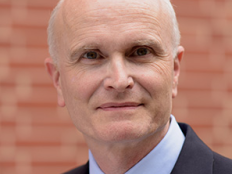
Axel Radlach Pries is a medical doctor, professor of physiology and dean of the Charité University Medicine in Berlin. Since this year he has also been President of the World Health Summit, a Berlin-based international health conference.
Foto: Wiebke Peitz, Charite Universitätsmedizin Berlin.


The UK is clearly ahead of Germany in terms of corona testing capabilities and viral genome sequencing, how can this be?

Indeed, this is currently the case. However, this view is based on a momentary glimpse of a very dynamic environment. It shouldn’t be forgotten that at the start of the pandemic, Germany was clearly ahead in terms of testing capacity. But what is certainly true is that Britain was able to change course quickly. This is due to the fact that interaction between politics and science worked very well. In addition, the UK is home to some truly outstanding biomedical research. Per capita, this line of research receives significantly greater funding in Great Britain and Scandinavian countries than it does in Germany. However, the current pandemic has clearly demonstrated that greater commitment to biomedical research is necessary and furthermore that this approach proves "worthwhile" in economic terms.

How can we improve future interaction between medicine and politics in Germany?

This requires several approaches. On the one hand, further investment into “Public and Global Health” resources is essential. This includes the technical and personnel upgrading of health authorities so as to improve networking both with each other and with the scientific community at large. On the other hand, we need a broadly positioned expert council for population health, along the lines of the long-existing German Council of Economic Experts, which represents a similar expert body in the economic field. Advice with respect to healthcare policy must finally be organized systematically in the current pandemic and thereafter.

Neuen Kommentar hinzufügen

Ihr E-Mail Adresse (wird nicht veröffentlicht, aber für Rückfragen erforderlich)
Ich bin kein Roboter
Geben Sie die Zeichen ein, die im Bild gezeigt werden.
Diese Sicherheitsfrage überprüft, ob Sie ein menschlicher Besucher sind und verhindert automatisches Spamming.

Vorherige Beiträge in dieser Kategorie

  • Nach der Beschleunigung kommt die Vollbremsung
Nach der Beschleunigung kommt die Vollbremsung

Die Corona-Pandemie als Sternstunde der Forschung? Ja – einerseits. Andererseits war es für viele Wissenschaftler ein bitteres Jahr. Und das dürfte erst der Anfang gewesen sein.


  • Artikelbild: War da was?

War da was?

Max Planck & Co bekommen bis Ende der 20er Jahre garantiert drei Prozent mehr – jedes Jahr. Im Gegenzug sollte künftig mehr von ihnen abverlangt werden – zum Beispiel durch ein ganz neues Förder- und Forderinstrument. Doch Bund und Länder scheinen die Pläne klammheimlich begraben zu haben.


  • Frauen weiterhin im Nachteil

Frauen weiterhin im Nachteil

Der jährliche GWK-Bericht zu "Frauen in Hochschulen und Forschung" zeigt nur langsame Fortschritte bei der Gleichstellung. Ein Kommentar.


Nachfolgende Beiträge in dieser Kategorie


  • Artikelbild: Wir brauchen einen Expertenrat für die Bevölkerungsgesundheit

Wir brauchen einen Expertenrat für die Bevölkerungsgesundheit

Warum Deutschland in Sachen "Public Health" lange hinterherlief, warum Länder wie Großbritannien so viel mehr testen und sequenzieren – und warum die Politikberatung in der Pandemie endlich systematisiert werden muss: ein Interview mit Charité-Dekan Axel Radlach Pries.


  • Warum schiefging, was schiefgehen musste

Warum schiefging, was schiefgehen musste

Orientierungslos durch die zweite Welle: Die Pleiten, Pech und Pannen der deutschen Corona-Politik haben eine gemeinsame Ursache. Das Zusammenspiel von Politik, Administration und Wissenschaft wird nicht funktionieren, solange "Public Health" nicht zu einer Leitdisziplin in Deutschland wird.


  • Artikelbild: Wir sind von Beginn an ein Pilotprojekt fürs deutsche Wissenschaftssystem gewesen

Wir sind von Beginn an ein Pilotprojekt fürs deutsche Wissenschaftssystem gewesen

Die Geschichte des Karlsruher Instituts für Technologie war in seinen ersten 15 Jahren ein Auf und Ab. Jetzt gönnt die Politik dem KIT ein neues Gesetz – und Präsident Holger Hanselka verspricht, dass es jetzt erst richtig losgeht. Ein Interview.